How to Build a Professional Fitness Center from the Ground Up
Building a professional fitness center from the ground up requires careful planning, the right equipment, and a clear understanding of your target users. Whether you are opening a commercial gym, developing a hotel fitness facility, or creating a corporate wellness center, every decision can affect the project's cost, functionality, and long-term success.
Rather than purchasing equipment first and arranging the space later, it is better to develop a complete plan that connects the facility's goals, layout, equipment selection, budget, and operational needs.
Here are eight essential steps to help you build a professional fitness center.
1. Define Your Business Goals and Target Users
Before selecting equipment, determine the purpose of your fitness center and the people it will serve.
A commercial gym may need a comprehensive range of strength and cardio equipment, while a hotel gym may prioritize versatile machines that accommodate different fitness levels. A corporate fitness center may focus on convenience, accessibility, and general wellness.
Consider the following questions:
- Who will use the facility?
- How many members or users are expected?
- What types of training will be offered?
- What is the available investment budget?
- Will the facility expand in the future?
Clear objectives will help you make better decisions about space allocation, equipment quantities, and overall project costs.
2. Evaluate the Space and Plan the Layout
The physical space determines what your fitness center can accommodate.
Before purchasing equipment, assess the total floor area, ceiling height, structural conditions, access points, ventilation, lighting, and available electrical connections.
Then divide the facility into practical training zones, such as:
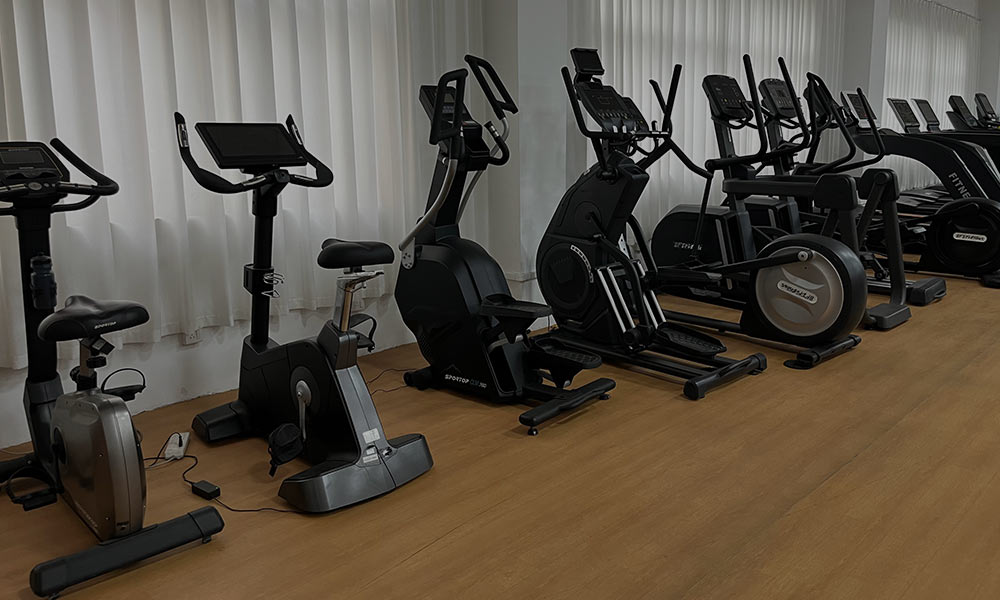
- Cardio training
- Selectorized strength training
- Free weights and plate-loaded equipment
- Functional training
- Stretching and warm-up
- Reception, changing rooms, and other supporting areas
The layout should provide sufficient clearance around equipment, safe walking routes, and convenient access between training zones.
Working with an experienced fitness equipment manufacturer to develop a 2D or 3D layout can help identify space conflicts before purchasing equipment.
3. Select the Right Commercial Fitness Equipment
Equipment selection should reflect the facility's size, target users, training requirements, and expected usage.
A professional fitness center will typically need a balanced combination of cardio, strength, and functional training equipment.
For example:
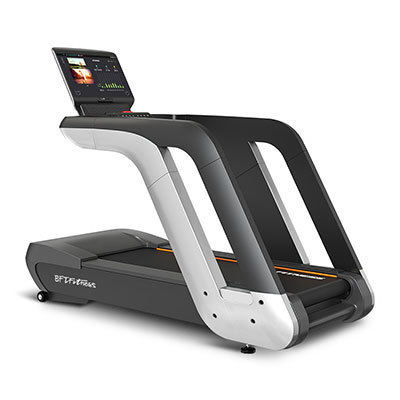
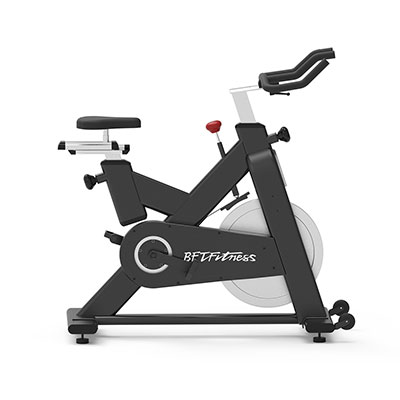
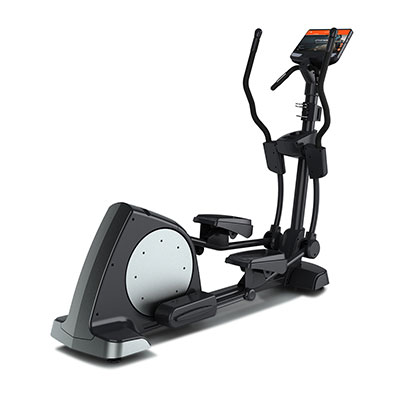
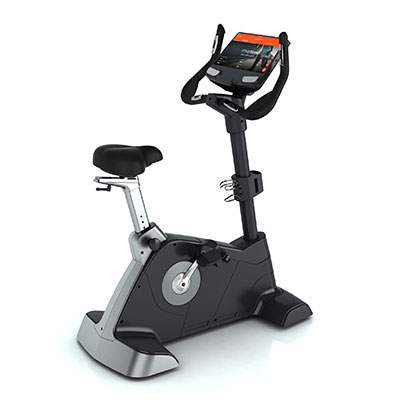
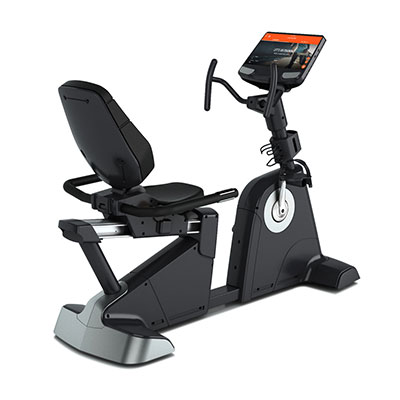
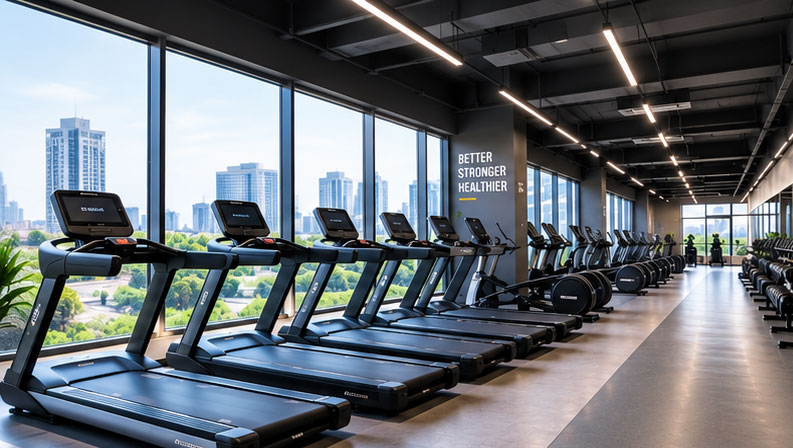
- Cardio: Treadmills, exercise bikes, ellipticals, and rowing machines.
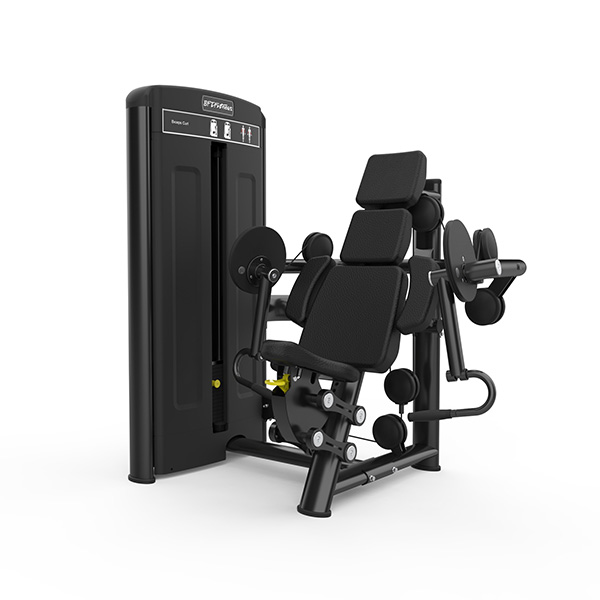
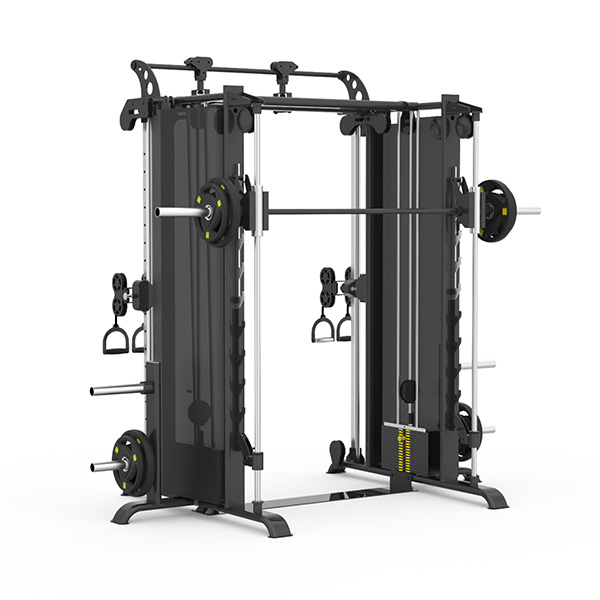
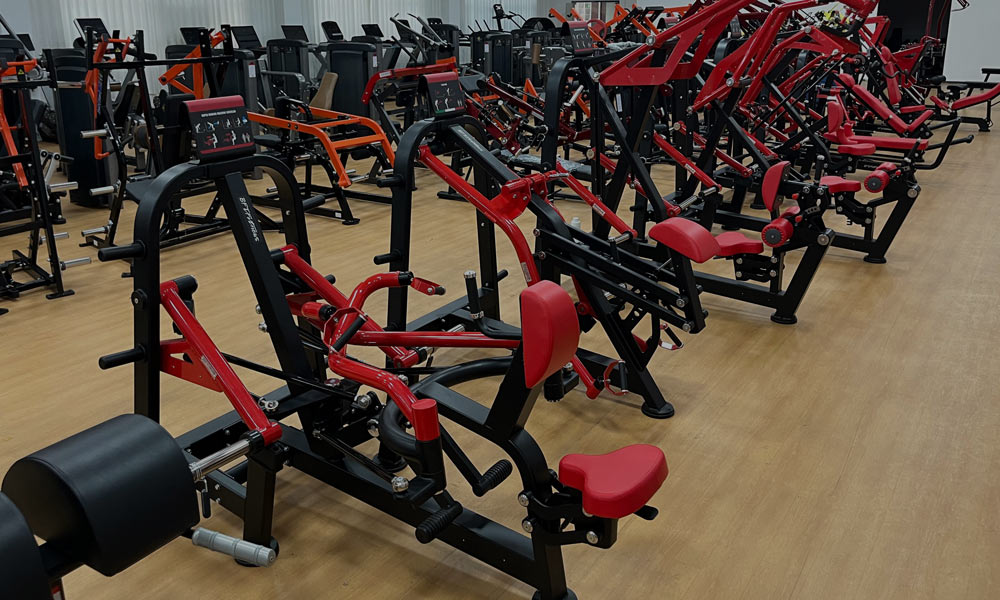
- Strength: Selectorized machines, plate-loaded equipment, cable systems, and multi-station machines.
- Free weights: Dumbbells, barbells, weight plates, benches, and power racks.
- Functional training: Functional trainers, kettlebells, medicine balls, and resistance bands.
You do not need to purchase every available machine. Prioritize essential equipment and choose versatile products that support multiple exercises, particularly when floor space or budget is limited.
4. Establish a Realistic Project Budget
A fitness center's initial investment extends beyond equipment prices.
Your budget should account for:
- Fitness equipment
- Flooring and interior preparation
- Electrical and ventilation work
- Delivery and installation
- Changing rooms and supporting facilities
- Staff training and maintenance
- Initial operating expenses
It is also wise to reserve funds for unexpected costs and future equipment replacement.
When comparing suppliers, evaluate the total project cost rather than focusing exclusively on the initial quotation. A well-planned equipment package can help control spending and reduce unnecessary purchases.
5. Prioritize Quality, Safety, and Durability
Commercial fitness equipment may be used repeatedly throughout the day, making durability and safety essential.
Evaluate frame construction, moving components, adjustment mechanisms, upholstery, weight capacity, and the availability of replacement parts.
Equipment should also be suitable for the intended users. Clear adjustment systems and intuitive operation can improve accessibility and reduce the risk of incorrect use.
Before ordering, request detailed specifications and verify relevant certifications or test reports for your destination market and equipment category.
Investing in suitable commercial-grade equipment can help reduce maintenance problems and support more consistent facility operations.
6. Choose a Reliable Fitness Equipment Manufacturer
Your equipment supplier can influence product quality, delivery schedules, customization options, and after-sales support.
When evaluating manufacturers, consider:
- Production capacity and manufacturing experience
- Product range and technical specifications
- Quality control procedures
- OEM and ODM customization capabilities
- Export and logistics experience
- Warranty and spare parts support
For a complete fitness center, working with a manufacturer that supplies multiple equipment categories can simplify procurement and improve consistency across the project.
BFT Fitness provides commercial fitness equipment and complete gym solutions for international B2B projects, helping buyers coordinate equipment selection, customization, and gym layout planning.
7. Plan Installation and Ongoing Maintenance
Equipment installation should be coordinated with the construction schedule to avoid delays and unnecessary handling costs.
Before delivery, confirm access routes, door dimensions, floor conditions, unloading arrangements, and the availability of installation personnel.
After installation, establish a maintenance schedule that includes regular inspections, cleaning, lubrication where required, and checks of cables, fasteners, and moving components.
Also confirm warranty coverage, technical support procedures, and spare parts availability before the facility opens.
Planning these requirements in advance can reduce downtime and help protect your equipment investment.
8. Prepare for Opening and Future Growth
A professional fitness center needs more than equipment and an attractive layout. It also needs to be ready for daily operation.
Before opening, verify that equipment is installed correctly, safety instructions are visible, staff understand basic operation, and maintenance procedures are in place.
Once the facility begins operating, monitor user feedback, equipment demand, peak-hour congestion, and maintenance records.
This information can guide future purchases and help you expand the facility based on actual usage rather than assumptions.
Conclusion
Building a professional fitness center from the ground up requires a coordinated approach to planning, budgeting, equipment selection, installation, and long-term management.
Define your target users, optimize the layout, select suitable commercial-grade equipment, and work with a reliable manufacturer that understands complete gym projects.
With a clear plan and the right supplier, you can create a functional, safe, and professional fitness facility while managing costs and preparing for future growth.
FAQ
How much space is needed to build a professional fitness center?
The required space depends on the facility type, number of users, equipment selection, and supporting amenities. A detailed layout should be prepared before finalizing the equipment list.
What equipment is essential for a new commercial gym?
Most commercial gyms need a balanced selection of cardio machines, strength equipment, free weights, benches, racks, and functional training accessories. The exact combination depends on the target members and available space.
How should I budget for a new fitness center?
Include equipment, flooring, interior preparation, delivery, installation, supporting facilities, maintenance, and initial operating expenses. Reserve additional funds for unexpected costs and future expansion.
Should I buy equipment from one manufacturer or multiple suppliers?
Working with one manufacturer for multiple equipment categories can simplify procurement, communication, and project coordination. However, buyers should compare product quality, pricing, specifications, and service before making a decision.
Can a fitness equipment manufacturer help plan the entire gym?
Many manufacturers provide equipment recommendations, 2D or 3D layout planning, customization, and complete equipment packages. Confirm the scope of these services before placing an order.