Selecting Fitness Equipment for Hospital and Rehabilitation Centers
Hospitals and rehabilitation centers are increasingly integrating structured exercise into patient recovery programs. Unlike commercial gyms, these environments demand fitness equipment that prioritizes safety, precision, and clinical outcomes. Selecting the right equipment is not simply a purchasing decision—it directly affects rehabilitation effectiveness, patient confidence, and staff efficiency.
This article explores how hospitals can choose fitness equipment that supports recovery, mobility, and long-term health.
1. How Hospital Fitness Needs Differ from Commercial Gyms
Medical facilities serve a very different user population.
1.1 Patients with Limited Mobility or Strength
Hospital users may include:
- Post-surgery patients
- Stroke survivors
- Elderly individuals
- Patients managing chronic conditions
Fitness equipment must support low-impact, controlled movement and gradual progression.
1.2 Clinical Oversight and Safety Requirements
Unlike gyms, hospital training often occurs under medical supervision. Equipment must:
- Allow precise resistance adjustments
- Maintain stable, predictable movement paths
- Support therapist-assisted exercises
2. Key Equipment Categories for Hospital Environments
Not all fitness equipment is suitable for medical use.
2.1 Medical-Grade Strength Equipment
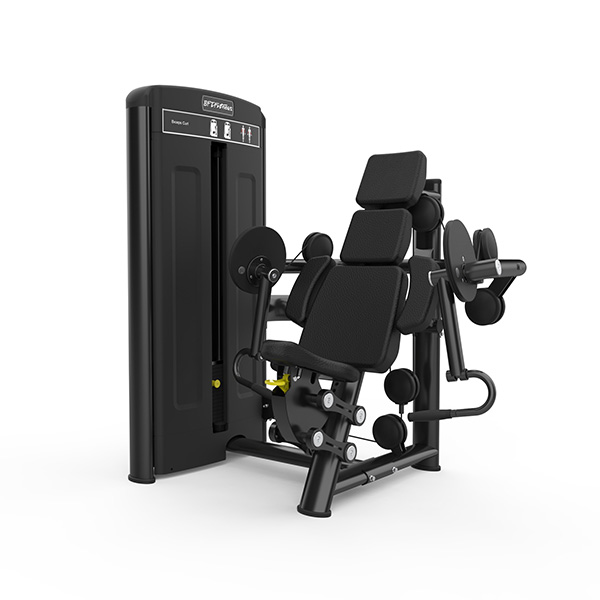
Selectorized machines with low starting resistance are ideal for rehabilitation.
Key features include:
- Small weight increments
- Clearly defined movement paths
- Easy access for patients with mobility aids
These machines support muscle reactivation without overloading joints.
2.2 Low-Impact Cardio Equipment
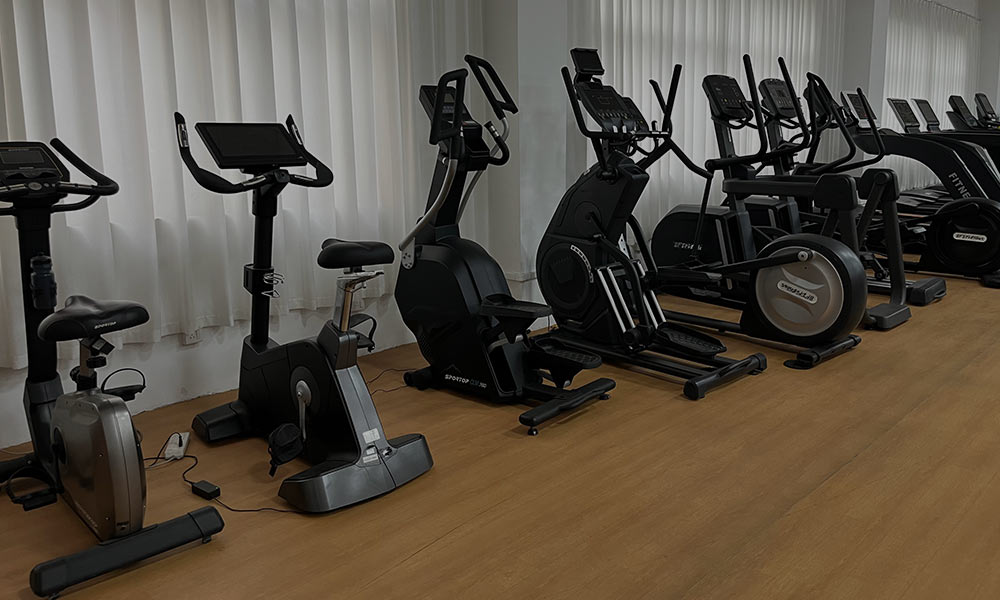
Hospitals typically favor:
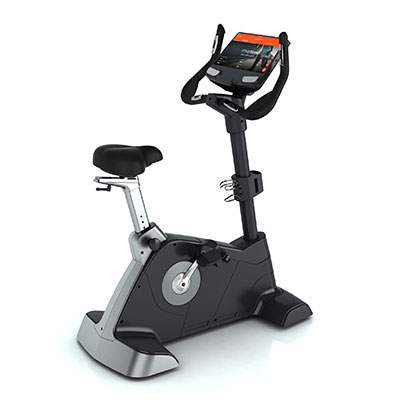
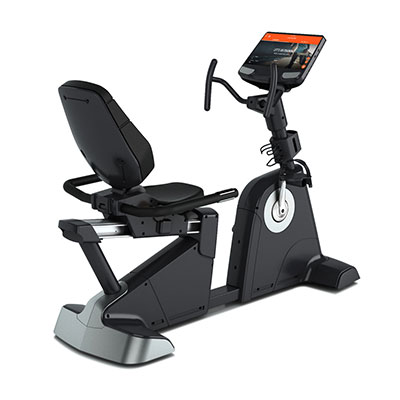
- Recumbent bikes
- Upper-body ergometers
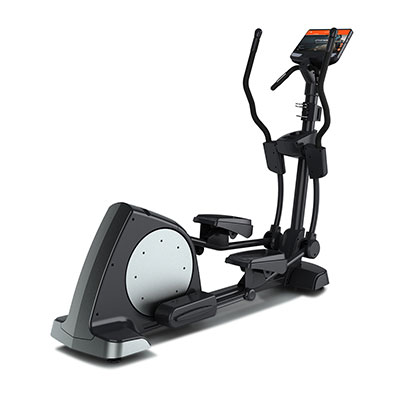
- Ellipticals with low step-up height
These machines promote cardiovascular recovery while minimizing joint stress.
3. Adjustability and Accessibility Are Non-Negotiable
3.1 Accommodating Different Body Types and Conditions
Equipment must allow fine-tuned adjustments for:
- Seat height and depth
- Range of motion
- Handle position
This ensures safe alignment for patients of all sizes.
3.2 Wheelchair and Assisted Access
Hospital fitness equipment should include:
- Step-through designs
- Open frames
- Easy transfer access
Accessibility directly impacts patient independence and dignity.
4. Supporting Physical Therapists and Medical Staff
Fitness equipment must enhance—not hinder—clinical workflows.
4.1 Therapist-Controlled Training
Therapists often need to:
- Adjust resistance mid-session
- Assist movement manually
- Observe biomechanics closely
Open, visible designs improve therapist interaction and assessment.
4.2 Clear Feedback for Progress Tracking
Equipment with built-in tracking helps staff monitor:
- Repetition count
- Training duration
- Load progression
This supports evidence-based rehabilitation planning.
5. Infection Control and Maintenance Considerations
Hygiene is critical in medical environments.
Hospital-ready fitness equipment should feature:
- Antimicrobial upholstery
- Sealed bearings
- Easy-to-clean surfaces
- Minimal exposed components
Durability and hygiene go hand in hand.
6. Long-Term Benefits of Proper Equipment Selection
Investing in appropriate fitness equipment delivers measurable outcomes.
Hospitals benefit from:
- Faster patient recovery timelines
- Reduced re-injury risk
- Improved patient confidence and compliance
- More efficient therapist workflows
Over time, well-designed fitness spaces become a core part of patient-centered care.
FAQ
Q1: Is commercial gym equipment suitable for hospital use?
A: Not always. Hospital settings require medical-grade features, low starting resistance, and enhanced accessibility.
Q2: Should hospitals invest in smart fitness equipment?
A: Yes. Smart tracking can support rehabilitation documentation and outcome analysis.
Q3: How often should hospital fitness equipment be replaced?
A: With proper maintenance, medical-grade equipment can last 8–10 years.