How to Balance Gym Equipment Quality and Budget
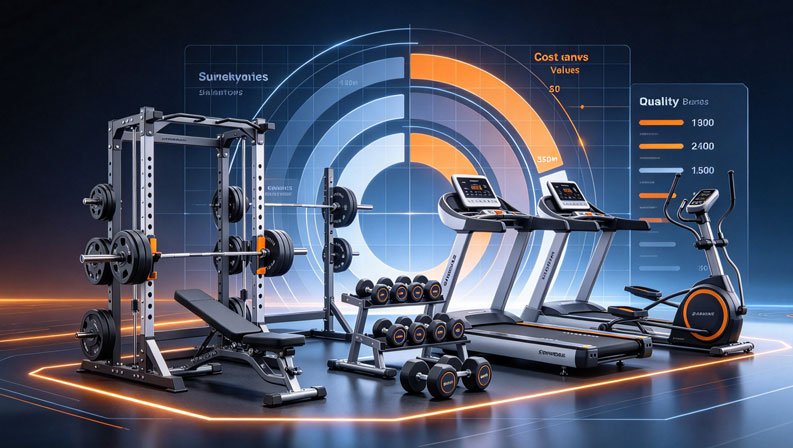
Choosing commercial gym equipment is often a balancing act between quality and budget. Gym owners want durable, professional equipment, but they also need to keep the initial investment under control.
Choosing the cheapest equipment can create higher maintenance and replacement costs later, while buying premium equipment for every area may unnecessarily increase the project budget.
The better approach is to determine where quality matters most and allocate the budget accordingly.
1. Understand What Commercial Quality Means
Commercial fitness equipment needs to withstand significantly more use than equipment designed for home users.
When evaluating quality, look at:
- Frame construction
- Steel thickness
- Welding quality
- Upholstery
- Cables and pulleys
- Bearings and moving components
- Adjustment mechanisms
A machine that looks attractive may not necessarily be suitable for a high-traffic commercial environment.
2. Prioritize High-Use Equipment
One of the easiest ways to balance quality and budget is to spend more on equipment that receives the most use.
For example, a commercial gym may prioritize higher-quality:
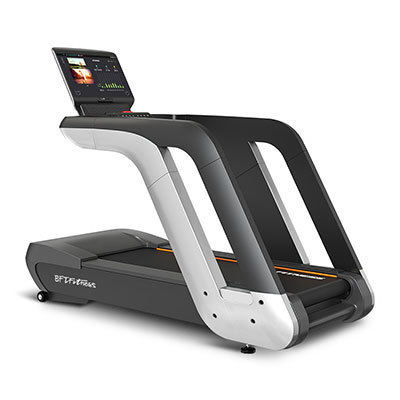
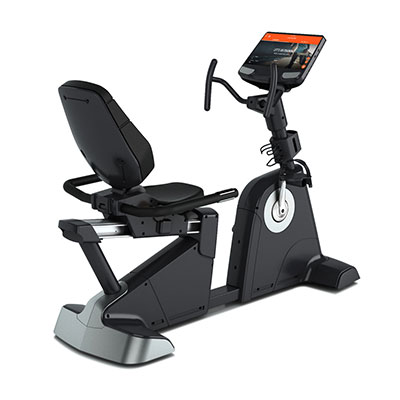
- Treadmills
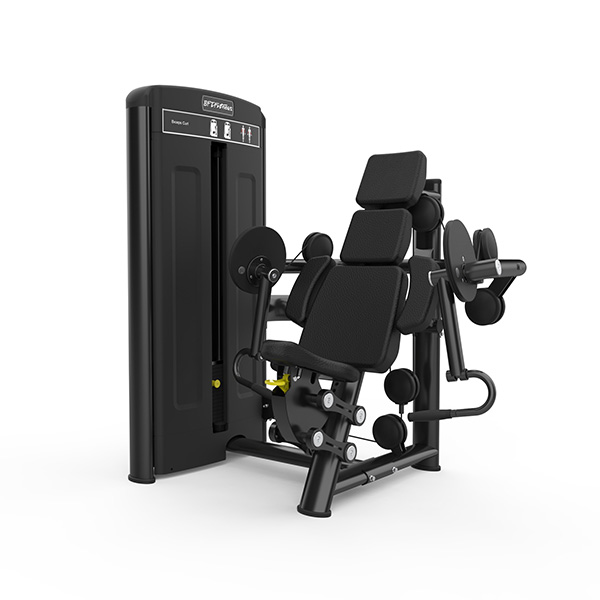
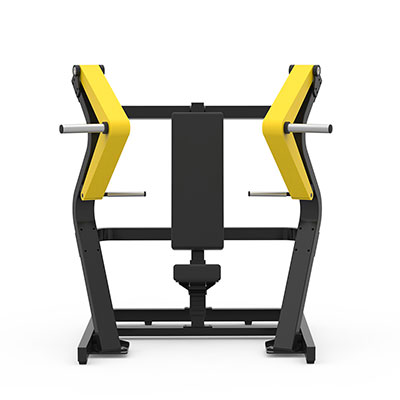
- Strength machines
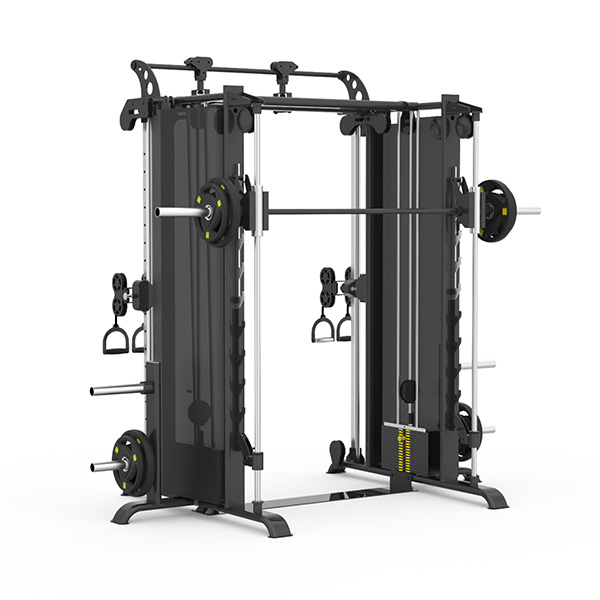
- Cable systems
- Benches
- Dumbbells
- Power racks
For equipment with lower expected usage, purchasing smaller quantities can help control the overall investment.
This approach allows the gym to maintain quality where it matters most without overspending across every category.
3. Look Beyond the Initial Purchase Price
The purchase price is only one part of the total cost.
A cheaper machine may become more expensive over time if it requires frequent repairs or replacement.
Consider:
Total Cost = Purchase Price + Maintenance + Spare Parts + Downtime + Replacement Cost
A durable commercial machine may cost more initially but provide better value over its service life.
For gym owners, the goal should be long-term value rather than the lowest quotation.
4. Choose Versatile Equipment
Versatile equipment can help maintain quality while reducing the number of machines required.
Functional trainers, cable crossover systems, power racks, adjustable benches, and multi-purpose stations can support numerous exercises.
This is particularly useful for smaller gyms and facilities with limited budgets.
Instead of purchasing many single-purpose machines, a carefully selected combination of versatile equipment can provide a broader training experience.
5. Compare Suppliers Carefully
Two suppliers may offer similar-looking equipment at very different prices.
When comparing quotations, check more than the product photos.
Evaluate:
- Materials
- Product specifications
- Warranty
- Quality control
- Certifications
- Production experience
- Spare parts availability
- After-sales service
For international buyers, the supplier's export experience and ability to provide complete project support should also be considered.
6. Consider Buying Directly from a Manufacturer
Working directly with a fitness equipment manufacturer can provide better control over product specifications and customization.
It may also reduce unnecessary costs associated with multiple intermediaries.
An experienced manufacturer can help buyers select equipment according to:
- Gym size
- Budget
- Target users
- Training requirements
- Project quantity
For larger commercial projects, manufacturers such as BFT Fitness can provide equipment packages, customization, and gym layout planning to help buyers balance investment and equipment quality.
7. Don't Over-Specify Every Area
Not every part of the gym requires the same equipment specification.
For example, a premium cardio zone may justify investment in advanced equipment, while a basic community fitness area may not need the most sophisticated consoles or features.
Budget should be allocated according to the role each equipment category plays in the facility.
This creates a more efficient investment strategy than choosing the highest-priced option for every machine.
8. Plan for Future Expansion
A good equipment budget should also consider what happens after the gym opens.
Instead of spending the entire budget on the initial setup, consider leaving room for:
- Additional equipment
- Replacement machines
- New training zones
- Smart fitness technology
- Facility expansion
This allows the gym to respond to actual member demand instead of making every purchasing decision before opening.
Conclusion
Balancing gym equipment quality and budget does not mean choosing between expensive equipment and cheap equipment. It means identifying where quality has the greatest impact and allocating the available budget intelligently.
Prioritize high-use equipment, consider total ownership costs, choose versatile machines, compare suppliers carefully, and avoid unnecessary specifications.
With the right planning and an experienced commercial fitness equipment manufacturer, gym owners can create a professional and durable facility without exceeding their investment goals.
FAQ
How much should I spend on quality when buying commercial gym equipment?
There is no universal percentage. Budget allocation should depend on gym size, expected usage, target members, and the importance of each equipment category.
Is expensive commercial gym equipment always better?
Not necessarily. A higher price does not automatically mean better value. Buyers should compare construction, components, durability, warranty, service, and expected lifespan.
How can I reduce equipment costs without choosing low-quality machines?
Prioritize high-use equipment, choose versatile machines, purchase appropriate quantities, and work with a manufacturer that can provide a complete equipment package.
Why is total cost of ownership important?
Purchase price does not include maintenance, spare parts, downtime, or replacement costs. Looking at total ownership costs gives gym owners a more accurate picture of long-term value.
Can Chinese fitness equipment manufacturers provide good quality at competitive prices?
Yes. Experienced Chinese manufacturers can combine commercial-grade production with competitive factory pricing. However, buyers should evaluate the manufacturer's production capability, quality control, certifications, and after-sales support before placing an order.