How to Choose the Right Curve Treadmill for Your Gym
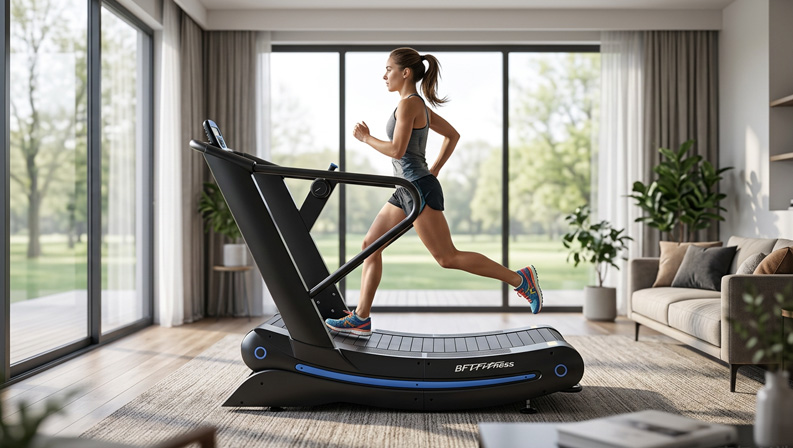
Curve treadmills, also known as manual treadmills or non-motorized treadmills, are becoming increasingly popular in commercial fitness facilities. Unlike traditional motorized treadmills, a curve treadmill is powered by the user's own movement, creating a more interactive and self-paced running experience.
For gym owners, however, choosing the right model requires more than comparing appearance and price. Frame construction, running surface, resistance, user capacity, maintenance, and intended training applications can all affect long-term value.
So, how do you choose the right curve treadmill for your gym? This guide covers the key factors commercial buyers should consider before making a purchase.
1. Understand How a Curve Treadmill Works
A curve treadmill uses a curved running surface rather than a flat motor-driven belt.
When the user moves forward, their foot movement drives the belt. This means the treadmill does not require a conventional drive motor to maintain belt movement.
Key Characteristics
A curve treadmill typically provides:
- Self-powered operation
- No conventional drive motor
- Variable running speed
- Curved running surface
- User-controlled acceleration and deceleration
Because the user controls the pace, curve treadmills are particularly suitable for sprint training, interval workouts, and functional conditioning.
2. Consider Your Gym's Target Users
The right curve treadmill depends heavily on who will use it.
Commercial Fitness Gyms
For general commercial gyms, choose a model that supports:
- Walking
- Jogging
- Running
- Interval training
A durable, easy-to-use model can accommodate a broad range of members.
Premium Health Clubs
Premium facilities may prioritize:
- Premium materials
- Quiet operation
- Modern appearance
- Ergonomic design
- Advanced displays
The treadmill should complement the overall quality of the facility.
Athletic Training Centers
Sports-focused facilities may require a more performance-oriented curve treadmill designed for:
- Sprint training
- Acceleration work
- HIIT
- Conditioning
- Repeated high-intensity use
Defining your target users before purchasing helps prevent investing in equipment that does not match your training programs.
3. Evaluate the Running Surface
The running surface is one of the most important components of a curve treadmill.
A commercial model should provide enough space for users to run naturally without feeling restricted.
Look At:
- Running belt dimensions
- Curvature
- Belt construction
- Slat or belt material
- Footing and traction
A larger running surface can be particularly beneficial for taller users and high-speed training.
The running surface should also provide consistent movement and adequate traction during acceleration, sprinting, and deceleration.
4. Check the Frame and Overall Construction
A curve treadmill for commercial use needs to withstand frequent daily use.
When comparing models, examine:
- Frame materials
- Welding quality
- Structural reinforcement
- Base stability
- Handlebar construction
A strong frame reduces unwanted movement and contributes to a more stable running experience.
For commercial facilities, durability should be considered alongside purchase price.
5. Consider the Resistance and Running Feel
Different curve treadmills can provide different running experiences.
Some models are designed for relatively smooth everyday running, while others emphasize greater resistance for high-intensity training.
Before purchasing, consider:
- Belt resistance
- Acceleration response
- Deceleration control
- Running smoothness
- User effort
The ideal model should provide a natural running experience while allowing users to control their own pace.
6. Look at Maximum User Capacity
Commercial gyms serve users with different body sizes and training styles.
Check the manufacturer's recommended:
- Maximum user weight
- Recommended usage
- Continuous-use capability
A treadmill designed for commercial environments should be able to handle repeated daily use without excessive wear.
This is especially important for gyms with high membership numbers, personal training facilities, and athletic performance centers.
7. Evaluate the Console and Training Data
Although a curve treadmill does not require a traditional motor, many commercial models still provide digital training information.
Depending on the model, the console may display:
- Speed
- Time
- Distance
- Calories
- Pace
- Heart-rate information
For modern gyms, clear and easy-to-read performance data can improve the user experience.
More advanced models may also support workout tracking or connectivity features.
8. Consider Maintenance Requirements
One major advantage of a non-motorized treadmill is its relatively simple mechanical structure.
Without a conventional drive motor, there are fewer motor-related components to maintain.
However, maintenance is still necessary.
Regular Maintenance May Include:
- Cleaning the running surface
- Checking belt/slat movement
- Inspecting bearings
- Checking fasteners
- Inspecting structural components
For commercial gyms, choosing a model with accessible replacement parts and reliable technical support can reduce downtime.
9. Think About Gym Space and Layout
Curve treadmills can become an important part of a functional training zone, but they still require adequate surrounding space.
Before purchasing, consider:
- Equipment dimensions
- Clearance around the treadmill
- User entry and exit
- Traffic flow
- Location within the training area
A common approach is to position curve treadmills near:
- Functional training areas
- HIIT zones
- Strength training areas
- Personal training spaces
This creates a dedicated area for high-intensity conditioning.
10. Compare Total Cost, Not Just Purchase Price
The cheapest curve treadmill is not necessarily the most cost-effective option.
When comparing suppliers, consider the total cost of ownership.
Evaluate:
- Initial equipment price
- Construction quality
- Expected service life
- Maintenance requirements
- Spare parts
- Warranty
- After-sales support
A higher-quality commercial curve treadmill may provide better long-term value if it remains reliable under heavy use.
11. Choose a Manufacturer with Commercial Experience
The supplier you choose can be just as important as the treadmill itself.
A reliable commercial fitness equipment manufacturer should be able to provide:
- Product specifications
- Quality control information
- Spare parts
- Warranty support
- Technical assistance
- Customization options
For gyms purchasing multiple machines, manufacturers may also provide logo customization and coordinated equipment designs.
BFT Fitness offers commercial fitness equipment solutions for gyms, Premium Health Clubs, hotels, corporate fitness centers, and other professional facilities, with equipment planning and customization support available for larger projects.
12. Request Product Information Before Ordering
Before placing an order, ask the manufacturer for detailed specifications.
Important information includes:
- Overall dimensions
- Running surface dimensions
- Net and gross weight
- Maximum user weight
- Product materials
- Console functions
- Warranty terms
- Packaging details
If possible, request product videos, detailed photos, or samples to better evaluate the treadmill before purchasing in volume.
For larger commercial projects, discussing the equipment with the manufacturer before finalizing the gym layout can also help avoid unnecessary changes later.
Conclusion
Choosing the right curve treadmill for your gym requires more than comparing prices. Commercial buyers should evaluate the treadmill's construction, running surface, resistance, user capacity, maintenance requirements, technology, and suitability for their target members.
The right model should provide a natural running experience while being durable enough for repeated commercial use.
Whether you are equipping a commercial gym, Premium Health Club, hotel fitness center, or athletic training facility, selecting a reliable manufacturer such as BFT Fitness can help ensure that your curve treadmills fit both your training requirements and long-term business goals.
FAQ
What is a curve treadmill?
A curve treadmill is a non-motorized treadmill with a curved running surface. The user powers the belt through their own movement rather than relying on a conventional electric motor.
Are curve treadmills good for commercial gyms?
Yes. Curve treadmills can be particularly useful for commercial gyms because they support self-paced running, sprint training, HIIT, and functional conditioning while offering a different training experience from traditional motorized treadmills.
What should I look for in a commercial curve treadmill?
Key factors include frame durability, running surface size, belt or slat construction, resistance, maximum user capacity, console functions, maintenance requirements, warranty, and after-sales support.
Do curve treadmills require electricity?
Most non-motorized curve treadmills do not require a conventional drive motor to move the running surface. However, some models may use batteries or electrical power for their digital console and performance tracking features.
Are curve treadmills suitable for beginners?
Yes. Because users control their own pace, curve treadmills can accommodate different fitness levels. However, beginners should start at a comfortable speed and become familiar with the running surface before attempting high-intensity workouts.